At LockFort Security our locksmiths we’ve attended real life break-in attempts on uPVC and composite doors; some were successful and some weren’t.
We wanted to share our knowledge and experience to help you keep your home protected from the most common uPVC break-in techniques used in real-life burglaries in Merseyside and the rest of the UK.
First, you need to understand what all of the break-in attempts had in common: Eurocylinders.
Eurocylinder locks on uPVC Doors
Eurocylinder locks are the actual lock itself and they are easily the most common lock found in uPVC doors across the UK.
Inserted through the uPVC door itself, they are a removable lock that controls the whole multipoint lock mechanism that runs of the side of the door. You can see the mechamism if you open your own uPVC door and look along the side that connects with the frame.
But as this blog will tell you, not all Eurocylinder locks are built the same way or to the same standards.
Shockingly, we find that most Euroclyinders we come across are not built and kitemarked to British Standards, and in some cases may not even be covered by the home insurance in the event of a burgalry!
Other than the uPVC door itself, eurocylinders can either be the strong point or the weakest point when it comes to break ins.
Please note – as much as we’d like to go into the specifics of how each break in technique works, we have to be careful not to share too much information; we can never tell who is reading our blog and might take advantage of the wrong information!
Eurocylinder Lock Snapping
Lock snapping has to be number one on the list of common uPVC break-in techniques used by burgulars in a hurry.
It’s fast (usually just seconds) and doesnt involve powertools so its surprisingly quiet too.
It’s what is known as a destructive entry technique and involves snapping weaker eurocylinder locks and pushing whats left of the lock out.
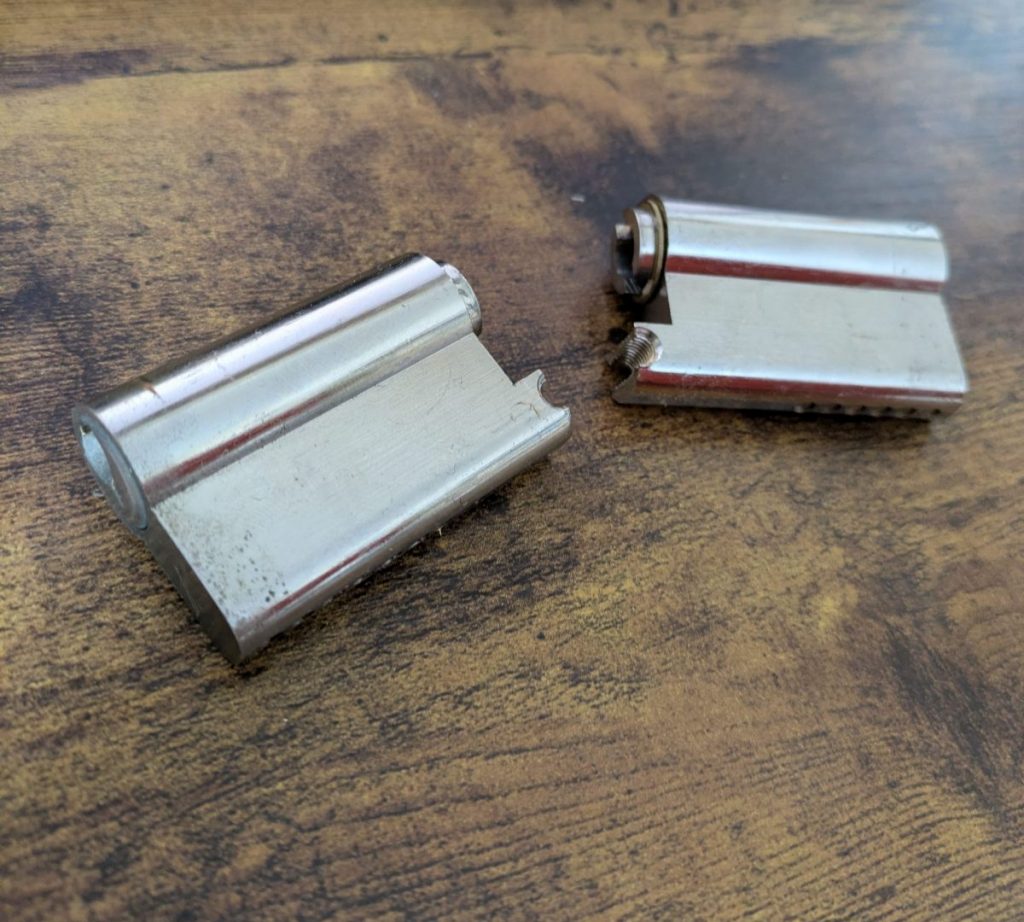
Locks that are particularly vunerable to locksnapping include more basic or older eurocylinders that are not British Standard, Anti-Snap or Sold Diamond Secure.
Many non-standard eurocylinder locks also feature a sacrificial cut that means if force is applied only part of the locks breaks off, meaning that snapping alone is not enough to allow a forced entry into the property.
In some cases, the burglar may remove the handle by force to accomodate snapping, and othertimes they may not need to if enough of the lock protrudes from the handle.
What makes some eurocylinders vulnerable to locksnapping?
- Lock protruding more than 3-5mm from the handle itself, allowing for the burglar to use tools more easily
- No ‘sacrificial cut’ on the eurocylinder
- Older locks and those not rated to British Standard TS007* (if rated, should have a British Kitemark and have 1* star or 3* star marking).
What can you do to protect against locksnapping?
- Purchase a 1 star or 3 star lock certified to British Standards
- Ensure that the new lock is sold as “Snap Safe” or Anti-Snap”.
- Ensure that the lock is fitted correctly and not protruding from the handle
- Consider a strong handle such as the 2-Star rated Ultion Handle.
Lock Drilling
Lock drilling is less common for burglars but sadly not unheard of. Many choose other techniques do to the noise created by drilling.
This technique involves a combi-drill and a tough drill bit. Like with locksnapping, the lock itself is destroyed but in a less obvious way: the pins inside the lock are destroyed or removed so that the lock can be turned and the door opened.
What makes some eurocylinders vulnerable to lock drilling?
- Older or non-starred cylinders may be made of softer metals like brass, making them far easier to drill.
- Again, non-starred and older locks may not feature anti-drill pins offering less resistance than newer, safer models.
What can you do to protect against lock drilling?
- Install harder anti-drill locks made of harder materials, featuring anti-drill security pins.
Lock Picking Eurocylinders
Sadly, lockpicking is not just something that happens in the movies, but it is rare yet not unheard of for a lock to be picked by a burglar to gain entry.
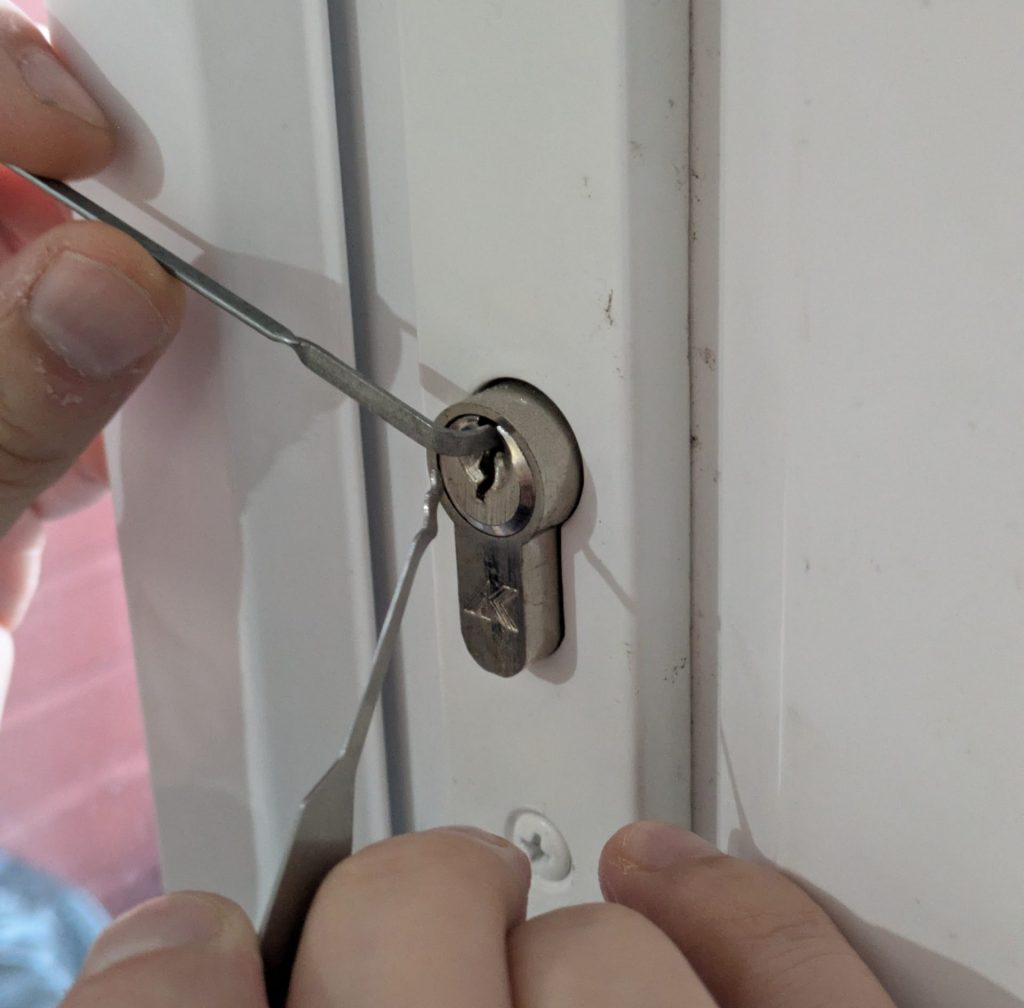
Although it can be silent in comparison to other more destructive techniques, it also takes quite a bit of skill to pick a lock quickly, as well as some investment in some decent picking equipment, and this could be the reason we see less picked locks in burglary attempts.
What makes some eurocylinders vulnerable to lock picking?
- You guessed it; older and non-starred eurocylinders are the most vulnerable. Many lack decent security pins that make lock picking difficult.
- Wider and less warded keyways give lockpickers more room to manourvere their picking gear, increasing their chances of success.
What can you do to protect against burglars picking your locks?
- Again, it comes to having a decent eurocylinder lock installed. Opt for ones that specically state anti-pick, such as 3-star locks and Sold Diamond Secure.
Increase in new eurocylinder attack techniques used by burglars.
Sadly, even as eurocylinder locks get better and better, burglars and their attack techniques get more sophisticated.
New techniques such as lock twisting (another brute-force attack) and Thermal attacks (involves freezing) are being developed and used across the UK.
Fortunately, the locksmiths are always onto them fast.
Our recommendation to protect against common break-in techniques
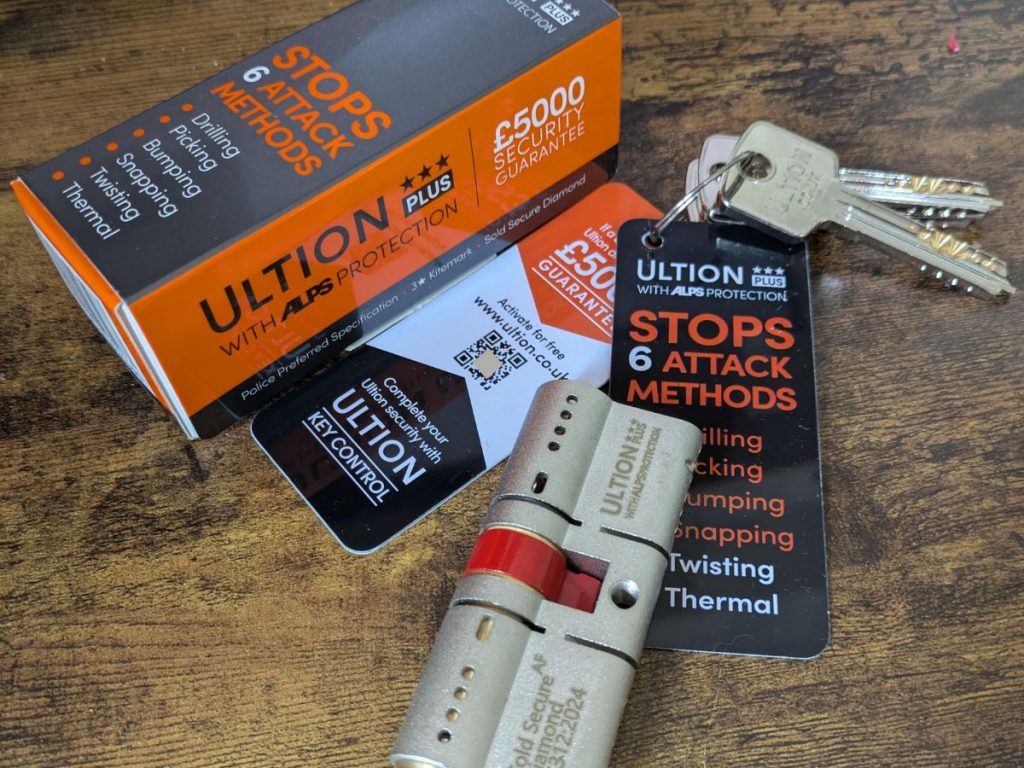
The new Ultion 3-star Solid Diamond Secure eurocylinders feature ALPS protection to guard against thermal attacks on top of their usual hardened defences against drilling, picking, snapping, bumping and twisting – a real fortress of a lock!
While no lock can truly protect against a skilled, knowledgable and equiped theif who has time on their side, Ultion 3-Star locks are what I have on my own home as a working locksmith, and I simply wouldn’t have anything less.
Check out our dedicated ultion locksmith page for more details.